

David Silva: Always The Bridesmaid
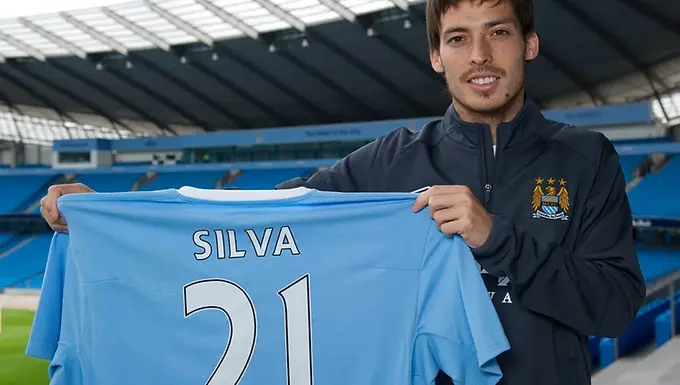

Arguineguín is a quaint and laboured town situated on the Coast of Gran Canaria, the most obscure of the Canary Islands. Known for its seafood, sunshine and deep rooted traditional Spanish culture, it’s a place where time moves slower and nothing of note ever really occurs.
Though, this wasn’t the case on the 8th of January, 1986.
David Silva was raised in a modest Canarian family with a police officer for a father who dovetailed as a semi-pro footballer on the weekends, and a mother of Japanese ancestry. His passion for football was evident almost straight away. He’d sit at the TV and gape at the technical brilliance of players like Michael Laudrup and Deportivo legend Juan Carlos Valeron.
David would spend the majority of his days with the ball at his feet, battle hardened by the roads of Arguieguin. At the age of nine, he joined the youth team of UD San Fernando - as a goalkeeper. Yes, you read that right. It would become apparent that this obviously wasn’t the correct use of his skillset and he was quickly moved out from between the sticks to become a wide player.
Because of the size of Arguineguín, or lack thereof, word travels like wildfire. It didn’t take long for the stories of a tiny, long-haired kid who possessed football ability from the Gods, to begin circulating the island. Silva’s talent was obvious, so obvious in fact that he went on trial at Real Madrid at the age of 14 - and he dazzled. Only to be told that he was too small to make it at Los Blancos.
News of this pocket-sized teenager who made Vicente Del Bosque trudge down from his office and take and take an interest, must’ve travelled around the country because Valencia quickly pounced on Madrid’s blunder and took him in only a few months later.
The Canary Islands are known for producing slow and languid, but technical players - perhaps a direct consequence of the way of life there which makes everyone play as though they have all the time and freedom in the world. Every now and again, a few anomalies crop up. Players who are technically brilliant whilst also possessing that spark and swiftness which evaded the masses. Pedri, Pedro Rodriguez, Alberto Moleiro and Yeremy Pino all hailed from areas not too far away from David Silva and so you can see pretty easily the template.
So when David Silva - aged 18 and deemed good enough to play first-team football, but not yet at the level to compete for minutes in a Valencia side which had just won La Liga - was sent out on loan to Eibar in the second division, there were huge doubts regarding how a player of his stature and inexperience would adapt to a more physical environment.
Eibar went on to finish with the most points they’d ever accumulated that season. 1000 miles away from Silva’s serene homeland, in the harsh cold and pouring rain, on the badly kept pitches of Eibar, this timid little squint was doing anything he wanted out on the pitch. Eibar’s coach Jose Mendes Dilibar told The Guardian, “He was a competitive bastard. The tackles were hard and he never backed down. If he had to kick he kicked. He had pride. He didn’t like to lose a game.”

Silva returned from loan at the end of the 2004/05 season to be sent away again, this time to Celta Vigo. They went on to finish 6th in La Liga after only just being promoted with the little Canarian playing 34 games and scoring 3 goals. How did Eibar fare the year after their record-breaking campaign which Silva was at the heart of? They finished 22nd and were relegated to the Spanish third tier.
By this point, it was obvious to everyone who cared enough to look, that Silva was a special player. He was instantly integrated into Valencia’s first-team in 2006/07, playing 47 games and scoring 8 times. For the three seasons that followed, he became endeared into the hearts of the Valencian faithful. Alongside other fellow young guns David Villa and Jouaquin, Los Che looked to be destined for great things under the guidance of the relatively unknown Unai Emery.
But hope dissipated as suddenly as it arrived. A cascade of financial issues imposed themselves on Valencia and it’s owners, leaving them with no choice but to sell their most prized assets. First it was David Villa to Barcelona, and then, even more brutally - David Silva left for Manchester City a few weeks later, for the laughable fee of £25 million.
My first memories of football coincided with the Spaniard’s inauguration into the Premier League. I was 5 when he joined Man City. By the time 2011/12 crept around and I can begin vividly recalling games I watched and players I loved, he was already a formality. From what I remember, he never dared to dip below a good performance. Everything wonderful City did, he had a strong hand to play in it. He’d walk away from every game with a goal or an assist and he’d do it all so casually, never arresting the spotlight.
This wasn’t how his career in England started though.
In the first game of the 10/11 season, Man City travelled to White Hart Lane and played out a relatively boring 0-0 draw. It was in the Match Of the Day coverage later that night however, where Alan Shearer analysing the game, referred to David Silva as David Villa at least 3 times and eventually had to be corrected by Gary Lineker.
It’s a funny anecdote to describe the level of ignorance English media used to have towards foreign leagues, but it’s also an example to show how dismissable David Silva was in the beginning. He was brought in the same season as Mario Balotelli and Yaya Toure and it was those two who would take most of the headlines. Silva was written off almost straight away as being too small and weak to really make an imprint on English football. Pep Guardiola said that the choice to go there he thought, was ‘career suicide.’
Silva didn’t help himself by leaving lackluster performance after lackluster performance on the table during the first few handful of games he spent in a City shirt. He seemed invisible on the pitch, easy to take the ball off and physically overpower - he was everything the masses assumed he’d be.
This all changed though on the 17th of October. The Citizens found themselves at Bloomfield Road, stuck in a goalless stalemate with Blackpool. In the 66th minute David Silva was subbed on. In the 67th minute Carlos Tevez had hit the back of the net with Silva claiming the assist. In the 90th minute, he scored one of the best solo goals the Premier League has seen, receiving the ball on the right hand-side of the box, dropping the shoulder twice and leaving two Blackpool players on the floor, before stroking the ball into the far corner as if it was the easiest thing in the world.
This was the day he arrived, his first Premier League goal. From that game on, he and City never dared to look back. He won three consecutive player of the month awards, setting a club record, and finished the season with 15 goals and assists combined in 53 games, defeating the ideology (which has annoyingly come back around recently) that high physicality is the only barometer of Premier League suitability.
The problem with David Silva was that he was the most inhibited world class player perhaps the Premier League has ever seen. Nothing about him away from the pitch screamed superstar. He was shy and wary, never doing interviews or commercials or anything to reaffirm his brilliance. Despite being regarded almost universally as the best player in the league during the 2011/12 campaign, finishing with 15 assists in the league and a Premier League winners’ medal around his neck, it was Robin Van Persie who walked away with the Player of the year award.
As much as his humility was what made him so admirable, it was also his crutch. David Silva would be the last person to tell you how good he was, seemingly uncomfortable to even acknowledge his talent. Aguero shone too brightly from the minute he set foot in the league. If it wasn’t him, it was Yaya Toure and his 13/14 season.
The same season where Man City sat 4th in the league by their 16th game with David Silva out the whole time with injury. The same season where he came back into the starting eleven in late December and they’d go on to lose only 2 of the next 20 games, ultimately winning the league. The season where he’d score two goals against Liverpool in the biggest game of the season and where he’d score and assist in a 2-0 win against Hull to drag Man City to three points after captain Vincent Kompany was sent off. The season he’d bag 7 times and assist 9 in the league and City would win their second Prem in three years. The season Adam Lallana was nominated for PFA Player of the year ahead of him.
2015/16 was Man City’s worst finish in the league since 2010/11. Is it a coincidence that it’s also the campaign in which Silva spent the most time out injured? Well, probably. It’s a bit of a stretch to say City’s uninspiring domestic campaign was a result of just one player not being stuck on the sidelines, right?
Their European campaign the same year glistened with more hope. Funnily enough, it was the competition Silva was playing all the knockout games of as Sheikh Mansour prioritised his fitness in the Champions League ahead of all else. All was going well as Silva had managed to controll and connive this fairly mediocre Man City outfit to a Champions League semi final tie against Real Madrid.
In the first bout, an intensely fought and relatively even showdown, the score finished 0-0. But, to everyone at the club’s dismay, Silva pulled up in the 41st minute and was subsequently taken off. He didn’t play in the second leg. That was the only Champions Laeague game all season which Man City lost.

On the surface, to the fans, media and almost anyone who had an eye on City, as soon as De Bruyne touched down in Manchester, it was his team. Though this isn’t a dismissal of his obvious greatness and legacy, I do wonder if this was the consensus inside the City camp too. For no matter who they signed in midfield, whether it was De Bruyne, Bernardo Silva or Ilkay Gundogan, the Spanish wizard they dubbed Merlin, remained a constant.
For all his grace and clairvoyance, the funny thing about David Silva was that he was a nasty player on the pitch. He loved a cynical foul and then acting as though he would never dare do such a thing. It’s likely what his coach at Eibar was alluding to over 20 years ago, but when he shaved his hair bald to become as close to Pep’s eyes and ears on the pitch as possible, it became more clear. Silva’s mini reinvention is a testament to his genius and to how highly Guardiola thought of him. He was happy to dig his heels in and do the dirty work if that was required. He was almost instantly one of the best midfielders in Europe. Famously, the only player ever allowed to take the ball on the half turn, despite operating slightly deeper than he used to, he was still every bit as brilliant.
He was finally awarded Man City’s player of the season in 2016/17. He followed that up the next year by setting the record for most games a player has ever won consecutively in English football history - with twenty five. This was at a time his infant son was extremely ill and he was often travelling to and from Madrid with his family. Man City’s worst spells of form would coincide when their number 21 wasn’t playing, They’d draw 2 games and lose 1 out of the 2019 he played but also draw and lose the same amount in the 9 games he didn’t play.
Silva’s time in Manchester came to a sad end as he walked off the Etihad pitch for the last time to an empty crowd during the prime of COVID-19. He left after 10 years at Man City along with 14 trophies to go with, whilst destroying the narrative that players like him couldn’t shine in England. Well, I say players like him, but truly there aren’t any.
He played alongside Xavi, Iniesta and Busquets during Spain’s Euro 2012 romp and looked to be on the exact same level. He arrived back in La Liga at Real Sociedad and was instantly one of the best players in the division when most thought he was slowly going to fade into obscurity.
It’s somewhat of a cruel joke that one of the purest, most naturally talented and humble footballers in the 21st century will mainly be known for the days he spent at a club whose legacy is forever stained. He deserved to be combining and interchanging with that legendary Barcelona midfield in the greatest club team of all time. He should’ve been there instead of now having his whole career in England questioned and tarnished for things he had no part to play in.

Maybe we didn’t know it when we were watching him play week in, week out and it’s only become clear now he’s gone and people begin to dig through the archives, but David Silva was Man City’s defining and most important player of the modern era. If you were to write a book about everything since that fateful day in 2008, he’s the one you dedicate the biggest chapter to, perhaps alongside Kevin De Bruyne.
We never saw a player like him before and every diminutive and technical midfielder we’ve seen since feels like some sort of knock-off. Jamie Carragher said watching him on the ball “was like players trying to tackle dust.” Joe Hart explained how, “he’s not fast. He’s so one-footed he’s a joke. He’s weak. But nobody could ever touch him.”
“The football player can survive whatever,” is a quote from Pep Guardiola when talking about the notion that smaller players can't do it England. Hopefully Silva can come out unscathed from the likely onslaught which will rain down on everyone that's been associated with Man City for the last decade and a half. Hopefully, when the day of judgement arrives and the Premier League enters the dawn of a new era, he’s still remembered as one of the best players to ever touch a ball on English soil.